
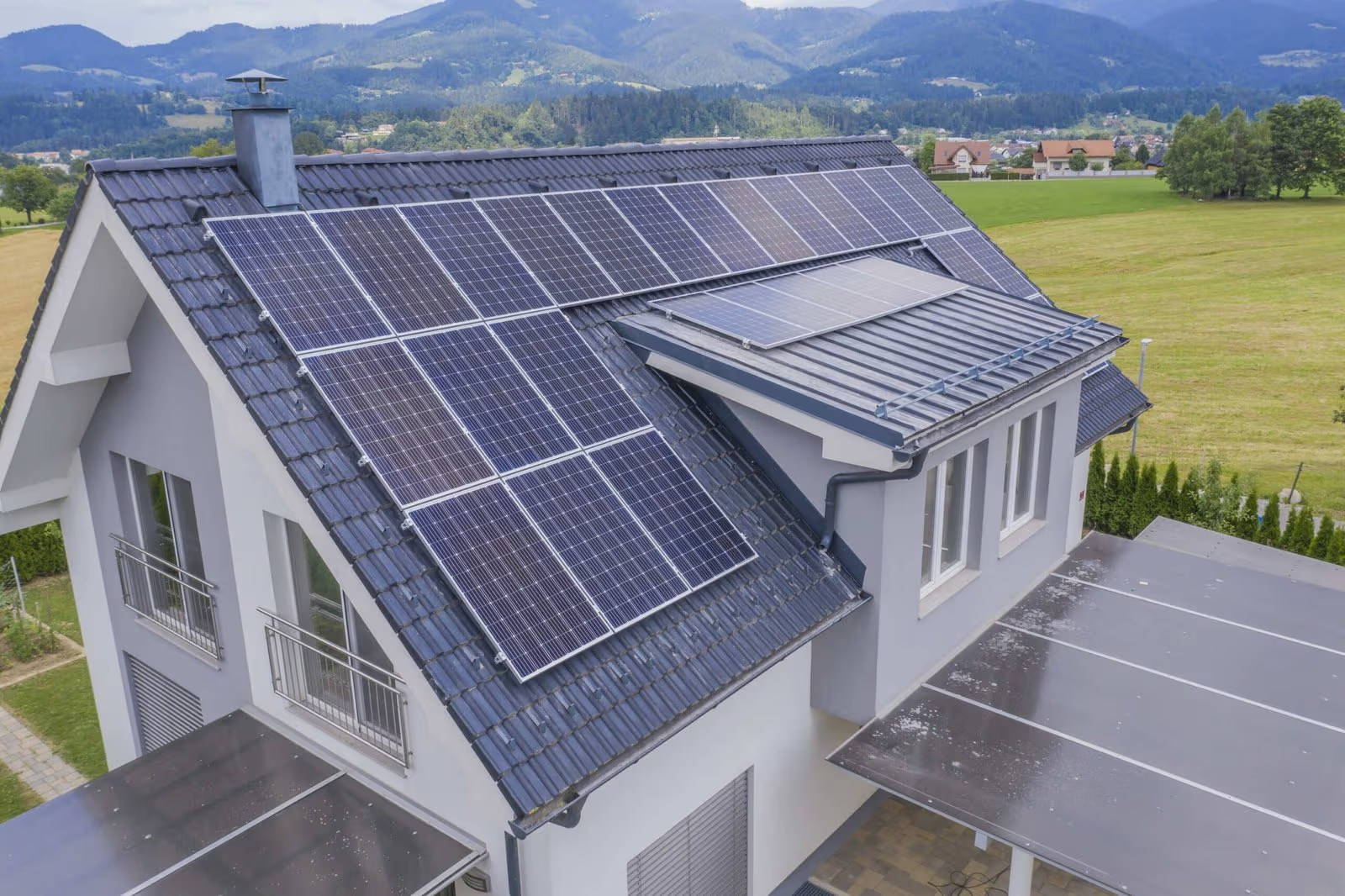
Solar-Ready Commercial Roofing & PV Integration in Milwaukee, WI
Milwaukee, WI commercial solar roof integration: PV racking penetration detailing, membrane compatibility, structural load and uplift review, and warranty coordination between your roofer and solar installer.
Putting Solar on a Milwaukee Roof Without Trading One Asset for Another
A rooftop array is supposed to throw off power for two and a half to three decades. The membrane it sits on rarely has that long to give. That gap is the whole story of solar roof integration, and it is why we walk every PV project from the roofing side first. We are not module brokers and we do not size inverters. We make sure the deck, the insulation, and the membrane beneath an array are sound, that every fastener and conduit run breaking the surface is detailed to last, and that nobody voids a warranty by skipping a step. Owners across Milwaukee — manufacturers in the Menomonee Valley, office and medical buildings in the Third Ward — usually call us with a solar bid in hand, asking the one question the solar firm cannot answer: will the roof carry this.
That hand-off is where buildings get into trouble. The solar installers working Milwaukee County and the suburbs south into Oak Creek and Franklin are strong on array layout and electrical, but the few inches between a racking foot and the structural deck are roofing — and roofing is what leaks. We own that zone so the two trades do not end up pointing at each other three years after the system goes live.
Start With How Much Roof You Have Left
Before anything else, we core the assembly and run a moisture survey to put a real remaining-service-life number on the membrane. The reason is blunt economics. Set a 150 kW array on a TPO roof in Walker's Point that has six years left, and when that membrane gives out you are not buying a roof anymore — you are paying a solar crew to strip and reset the entire array around a tear-off. On a field that size the de-rack and re-rack alone can run into five figures and pull the panels offline for weeks.
So we give you an honest read and two paths. If the membrane shows fifteen or more years of life, we are comfortable building solar on what is already up there. If it reads short, the right move is almost always to reroof first and set the array onto a fresh membrane the same season — one mobilization, one warranty start date, and no second tear-off waiting in year eight. We lay both out with numbers attached. The call is yours; we just refuse to let it be a guess made from the parking lot.
Weight, Ballast, and What Old Milwaukee Buildings Can Take
Most low-slope commercial roofs in this market default to a ballasted racking system — weighted trays that hold the array down without driving fasteners through the membrane. For a roofer that is the cleaner option, because it keeps penetrations near zero. The catch is dead load: counting the ballast blocks, a ballasted array commonly adds three to six pounds per square foot across the whole roof. A lot of Milwaukee's industrial stock, especially the mid-century buildings strung along the 30th Street corridor and out in the Menomonee Valley, was never framed with that margin in reserve. We bring in a structural review of the deck and joists before anyone commits to ballast.
When the structure cannot spare the load, the array gets mechanically attached instead — and now there is a membrane penetration under every racking foot, sometimes hundreds of them. Each one is a leak waiting to happen unless it is flashed to the manufacturer's published detail, not capped with whatever rubber boot the installer had on the truck. Wind uplift gets its own look, because the wind off Lake Michigan is real and an array changes how the roof and the equipment load up in a gust. A building near the harbor or on an exposed lakefront parcel gets a stricter uplift workup than one tucked behind taller neighbors inland.
The Membrane Penetrations Are the Whole Ballgame
Conduit has to travel from the array back to the building's electrical service, which means it crosses the roof somewhere, and how those crossings are built is the line between a dry roof and one that drips for a decade. Two failures show up again and again. First, conduit strapped flat against the membrane, where every thermal expansion and contraction cycle saws an abrasion line into the surface until it wears through. Second, penetrations sealed with hardware-store boots instead of a proper through-roof curb or a poured pitch pan. Our standing rule closes both: the roofing crew owns anything that passes through the membrane. The solar electrician pulls wire. We flash the openings, set the standoffs that hold conduit up off the surface, and sign off before backfill.
That rule only works with sequence. Before construction we sit down with the solar EPC, map every conduit route, lock the penetration details, and agree on order of operations. The membrane goes down and gets inspected, racking lands on top of it, then conduit pulls through openings we already flashed. Reverse that and someone is cutting into a finished roof — one of the fastest ways to void the warranty you just paid for.
Keeping Two Warranties Alive at Once
Here is the trap. The solar contractor warranties the array. The membrane manufacturer warranties the roof. And a solar installation done without the manufacturer's sign-off voids that roof warranty outright. The major single-ply makers — Carlisle, GAF, Johns Manville, Versico — all permit rooftop PV on their warranted systems, but strictly on their terms: approved ballast pads under the trays, approved walkway protection along access and service routes, approved penetration details, and a pre-installation design review on file with their rep. Miss the review and the roof is uncovered the day the array energizes.
We run that review as part of the project so the membrane warranty survives the install, document the assembly, and register the work so the paper trail satisfies both the manufacturer and the solar provider. The point is a building where, twenty years out, a leak claim turns into a repair instead of a deposition.
What We Actually Build for Solar in Milwaukee
For a new solar roof we most often specify a reflective white membrane — 60-mil TPO or PVC. The white surface runs cooler under the panels through our warm, humid summers, which nudges array output up a notch, and it gives ballast trays a clean, uniform bearing surface. Where ballast weight is the constraint, a fully adhered system drops the attachment-plate dead load while still meeting the uplift numbers. Either way we lay extra walkway pad down the inverter rows and service aisles, because foot traffic is what ages a membrane before its time.
Whether you are a Menomonee Valley manufacturer chasing the federal Investment Tax Credit, a downtown building working the We Energies net-metering math, or a distribution center off I-94 trying to shave demand charges, the array only pencils out if the roof under it holds. We make sure that foundation is right before the solar money is committed — not after the first leak.
Solar Roof Integration Questions We Hear in Milwaukee
Should we reroof before going solar, or build on the existing roof?
It hinges on remaining service life. With fifteen or more sound years left, setting solar on the current membrane is the right call. With seven years or less, reroofing first and installing the array the same season almost always wins, because stripping and resetting panels around a future tear-off costs far more than doing the roof once now. We core the assembly and run a moisture survey to put a real number behind the decision before you spend.
Will the array overload our structure?
A ballasted array typically adds three to six pounds per square foot, and much of Milwaukee's older industrial framing was never designed with that cushion. We coordinate a structural review of the deck and joists first. If the building cannot carry ballast, we move to a mechanically attached layout, trading dead load for membrane penetrations that we then flash to the manufacturer's detail.
Who is responsible for the racking and conduit penetrations?
We are. On every solar project the roofing crew owns anything that breaks the membrane — attached racking feet, conduit standoffs, and through-roof curbs. The solar electrician runs the wire; we flash the openings and inspect them before they are buried. That single division of labor heads off the abrasion and bad-boot leaks we keep finding on jobs where the solar crew sealed its own holes.
How does going solar affect our roof warranty?
The major membrane manufacturers allow rooftop PV on warranted roofs, but only with approved ballast pads, approved walkway protection, approved penetration details, and a pre-installation review by their rep. We manage that review and file the documentation so the membrane warranty stays valid after the system is energized. Skip it and the roof warranty is dead the moment the array goes live.

Share the roof address, current issue, photos if available, and any access limits. The response can be framed around inspection, repair, maintenance, coating review, or replacement planning.
Related roof pages

Commercial Roofing in Bayside, WI
Roofing for Bayside's offices and retail sits close enough to Lake Michigan that wind uplift and winter ice loading drive the inspection more than anything else.
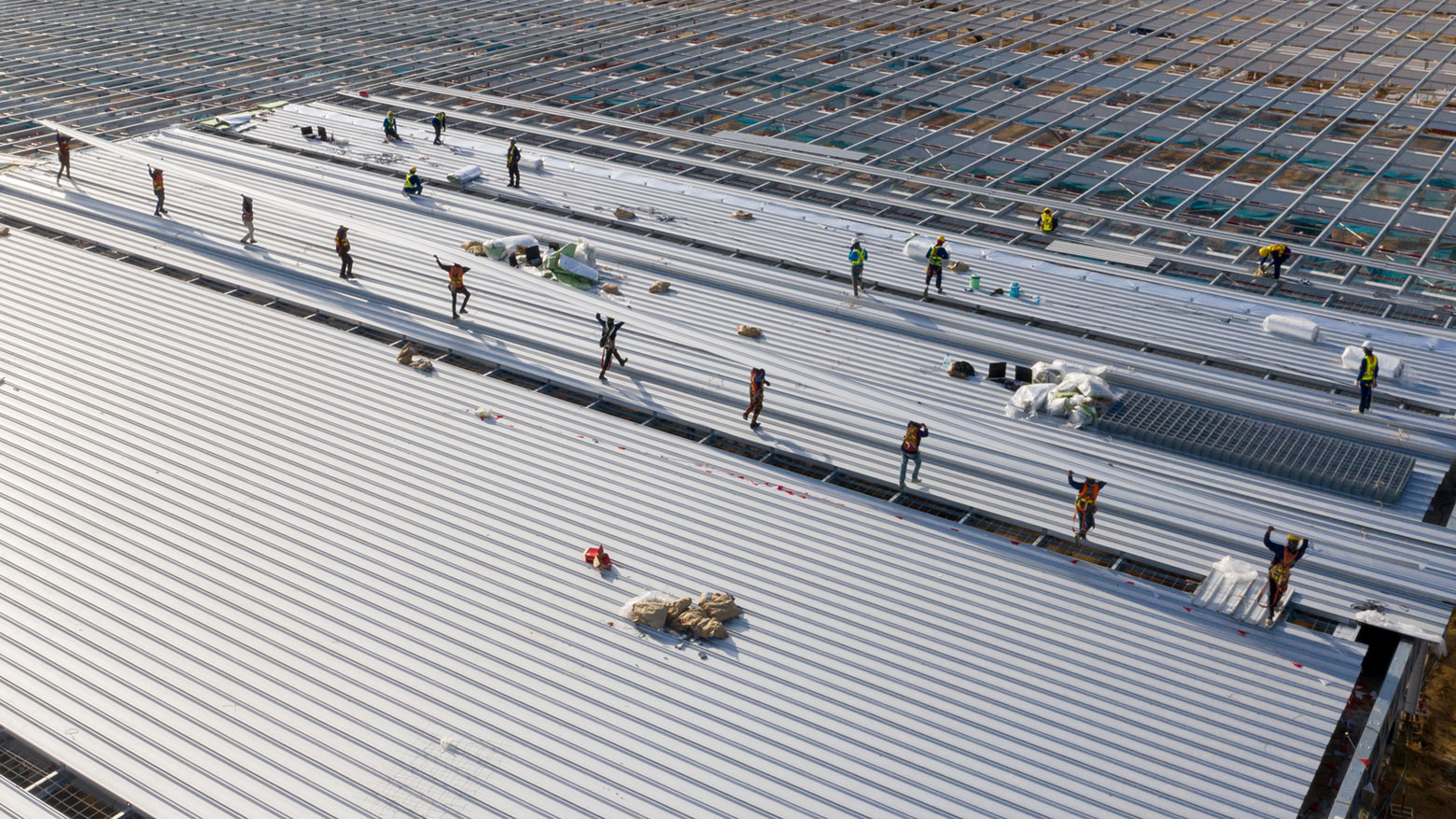
Architectural Sheet Metal in Milwaukee, WI
Custom copings, fascia, and edge metal fabricated to suit older Milwaukee facades and the wind coming off Lake Michigan, with profiles detailed so seams shed meltwater instead of trapping it.

Auto Dealership Roofing in Milwaukee, WI
Showrooms and service bays stay open while the roof is addressed, which matters when a January thaw sends water over the sales floor at a busy Milwaukee dealership.
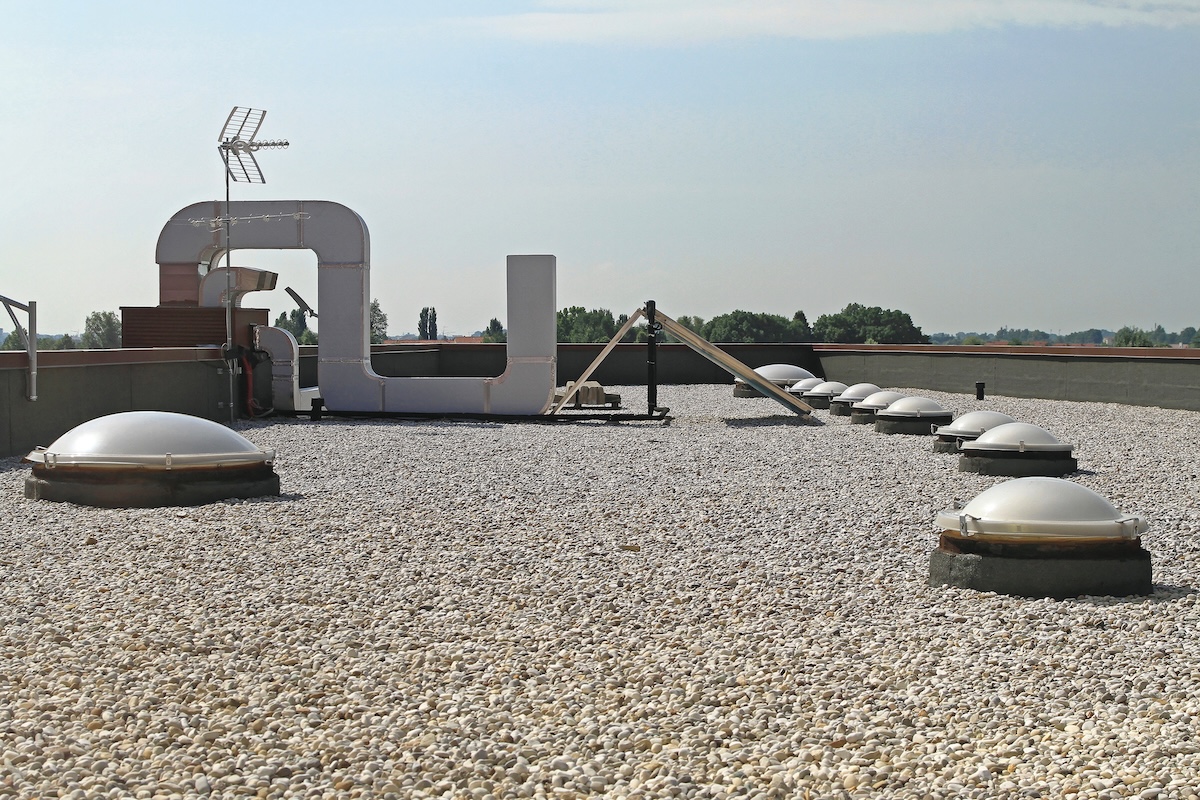
Built-Up Roofing in Milwaukee, WI
Many of Milwaukee's mid-century commercial blocks still wear gravel-surfaced BUR; we assess the ply count, blistering, and ponding before deciding between repair and a tear-off.