
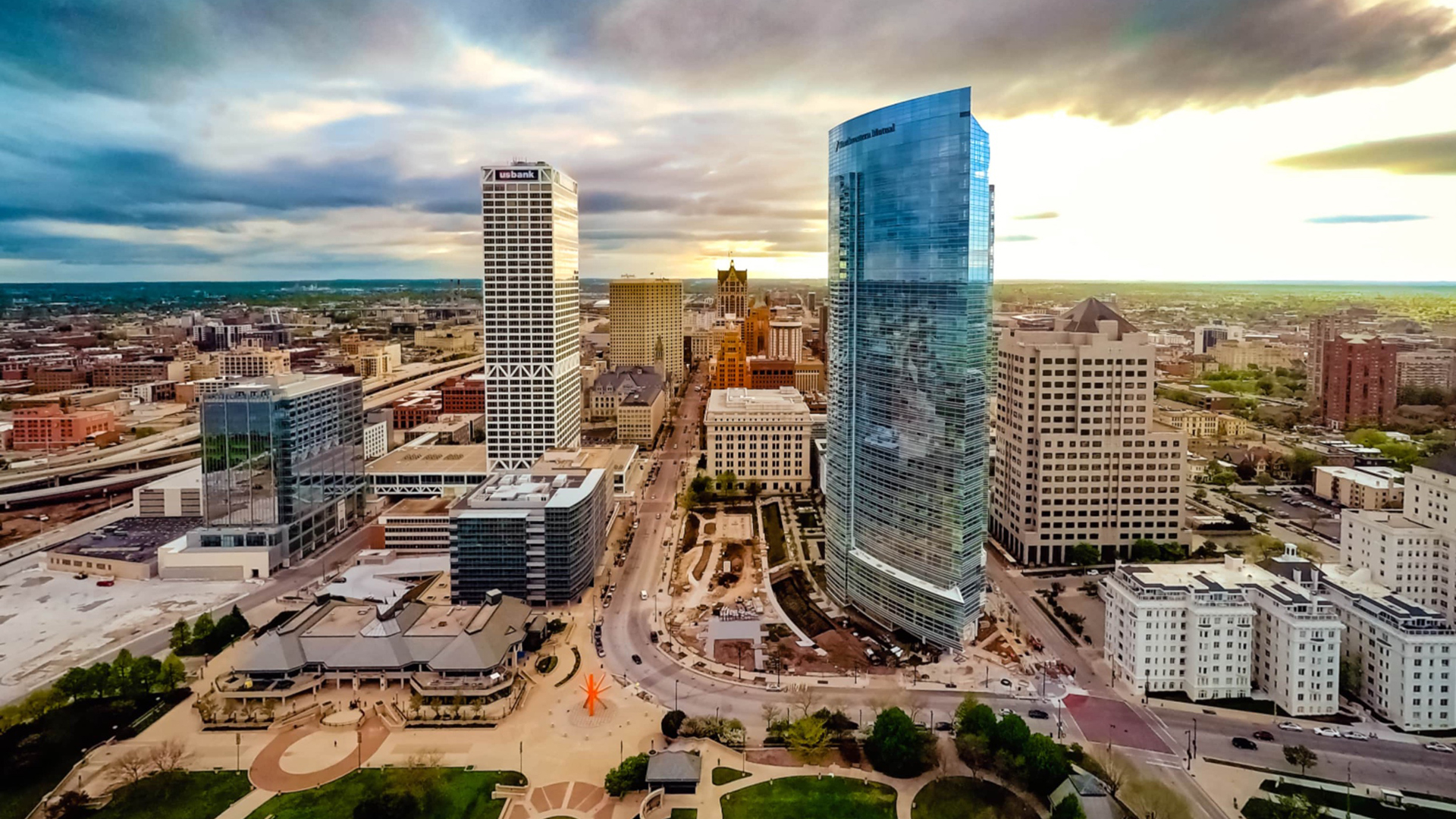
Airport Terminal & Aviation Facility Roofing in Milwaukee, WI
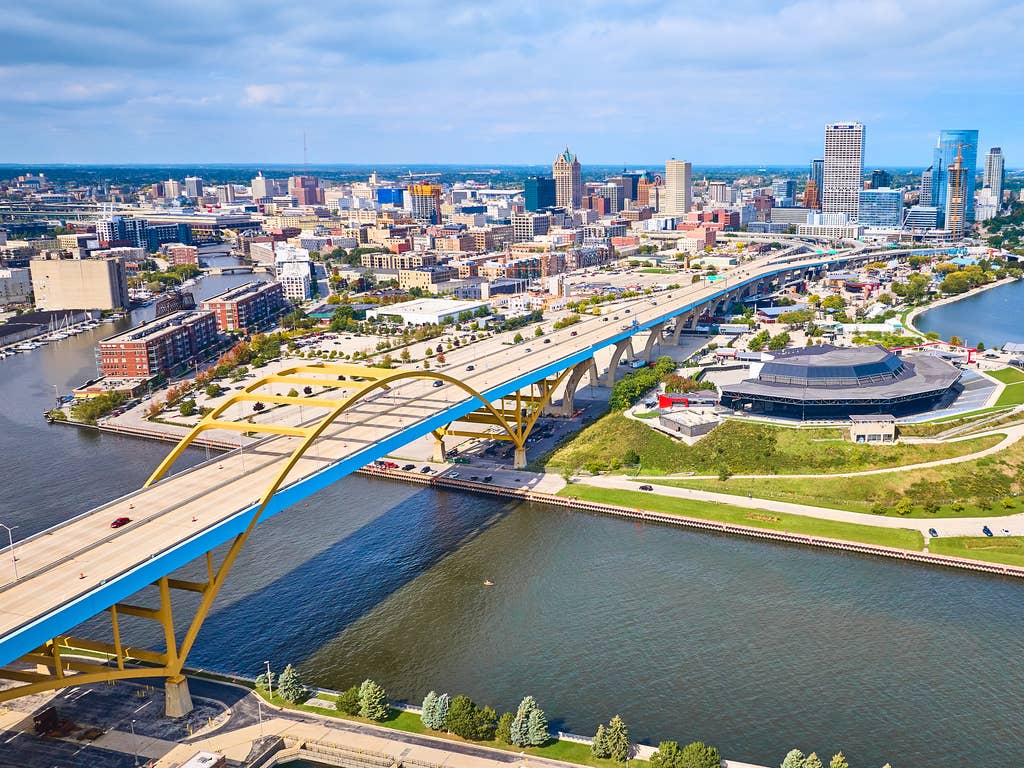
Roofing for airport terminals and aviation facilities in Milwaukee, WI — Mitchell International and area hangars, with wind and jet-blast exposure and 24/7 operations.
Roofing for terminals, hangars, and aviation support buildings around Milwaukee — huge roof areas, wind and jet blast, and operations that never stop.
An airport never closes, so the roof job has to plan around that
The thing that separates aviation roofing from every other commercial project is that the building does not stop. Milwaukee Mitchell International Airport runs around the clock, with American, Delta, Southwest, and United moving passengers through at every hour, and that means there is no night where the terminal goes dark and a crew has the place to itself. Every access point, every material hoist, every crew movement has to be worked out in advance with the airport's facilities team, the FAA Part 139 safety program that governs operations there, and TSA security protocols in the secured zones. We treat that coordination as the first part of the scope, settled before the contract is signed rather than discovered on the first morning of mobilization.
Milwaukee sits right on Lake Michigan, and that location does two things to an airport roof. It drives a maritime freeze-thaw cycle and wind-driven rain that the membrane and edge details have to be specified for, and it generates the kind of hard, sustained wind that makes uplift the governing design factor on these wide, exposed roofs.
Terminal roofs are huge, flat, and intolerant of standing water
Terminal roofs cover enormous, nearly flat expanses with very little slope to work with, which makes drainage the make-or-break detail. There is almost no tolerance for ponding on a roof this size — water that sits finds the one weak seam and the one undersized drain. Most terminal re-roofing here runs a TPO or PVC single-ply over a tapered insulation system specifically to build slope back into a deck that never had enough, and we size the drains and overflow scuppers for the real rainfall and snowmelt loads a Wisconsin year delivers.
Terminals also carry far heavier and denser mechanical equipment than a comparable commercial building. The HVAC serving a concourse means a crowded field of large, curbed penetrations, each one engineered individually rather than dropped onto a standard detail. On the airside, roofs near gates and aprons take jet-blast exposure, which demands adhesion and ballast specifications well beyond what we would put on a logistics box of the same footprint. We survey every curb, clearance, and penetration before building the work plan.
Beyond the terminal: hangars, cargo, and the relievers
A lot of aviation roofing around Milwaukee is not the terminal at all. It is the cargo facilities, the rental-car centers, the FBO buildings, the aircraft-maintenance hangars, and the hotels sitting on the airport campus — and the area's general-aviation relievers carry their own steady demand:
- Waukesha County Airport (UES) — the general-aviation reliever serving the west side of metro Milwaukee
- Lawrence J. Timmerman Airport (MWC) — general aviation on Milwaukee's northwest side
The security intensity is lower at the relievers and at campus-edge buildings, but the structures are often more demanding to roof. High-bay hangars with wide clear spans and pre-engineered metal building systems take serious wind uplift and move with temperature swings, so seam geometry and fastening patterns have to be specified for those loads. For new high-bay hangar work we often spec standing-seam metal; the right system depends on the existing deck, its load capacity, and the operational constraints, which is why we walk the roof with the facilities engineer before committing to a specification.
Badging is not optional anywhere on the field
Our crews understand that access at any part of an airport campus is controlled, and we plan for badging and credentialing rather than treating it as a hurdle to improvise around onsite. Airside work in particular requires confirmed authorization before anyone sets foot in the area, deliveries and crane lifts scheduled into approved windows, and coordination with the FAA NOTAM process where the work calls for it. We do not put unbadged crew near an active apron, and we do not learn the airport's rules on the owner's project.
Winter is the season that tests an aviation roof
Snow and ice are not an afterthought on a Milwaukee airport roof; they are a design case. A heavy lake-effect snowfall puts real, sustained load on a wide terminal deck, and uneven drifting against parapets, equipment screens, and clerestory walls concentrates that weight in exactly the places where the membrane is already working hardest. We look at drift loading when we lay out insulation thickness and crickets, and we build drainage redundancy in — primary drains plus overflow scuppers or secondary drains — so that a blocked leader during a January thaw does not turn into ponded meltwater sitting on the deck. On terminals we frequently find original drains that were marginal the day they were installed and have only gotten worse as the roof aged; correcting that drainage capacity is often the single most valuable part of a re-roof.
The other winter reality is de-icing. Glycol-based aircraft and pavement de-icing fluids get tracked, blown, and splashed onto airside and apron-adjacent roof areas, and over time those chemicals are hard on certain membranes and on edge metal finishes. We account for that exposure when we select the membrane and the metals near apron-facing edges, and we keep drainage paths clear of the debris and residue that builds up in a working winter so water keeps moving off the roof instead of pooling against a seam.
Re-roofing a terminal that can't shut down
Replacing a terminal roof is almost always a phased operation done over an occupied, fully operating building, which is its own discipline. We sequence the work into manageable sections, tie each day's progress into a watertight edge before the crew leaves, and protect the occupied concourse below at every step — there is no acceptable scenario where a passenger-facing space takes water because a work area was left open overnight. Tie-offs between new and existing membrane are detailed deliberately so the roof is continuous and warrantable even while half of it is new and half is original. Material staging, crane picks, and debris removal all get scheduled into the windows airport operations approves, because a laydown area that blocks a service road or a fire lane is a non-starter at a Part 139 facility.
At closeout the owner gets a complete package: permit and final inspection records, the manufacturer's NDL warranty registered in the owner's name, a roof zone diagram documenting drains, scuppers, and the full penetration inventory, and photographic documentation of the critical details and tie-offs. For an asset this large and this operationally sensitive, that documentation is what lets the facilities team manage the roof for the next twenty years instead of rediscovering it the next time it leaks.
Questions aviation clients ask
How do you keep work from disrupting an operating airport? We build a phased plan approved by airport operations and the Part 139 coordinator, schedule lifts and deliveries into approved windows, and run the NOTAM process when required.
What goes on a large terminal roof? Usually TPO or PVC over tapered insulation to fix drainage and ponding; standing-seam metal on new high-bay hangars. We spec after walking the roof with your engineer.
Can you work airside near active aprons? Yes, with full badging and airfield-operations coordination. We do not mobilize crew without confirmed airside authorization.
- Warehouse Roofing
- Hospital Surgery Center Roofing
- Office Complex Roofing
- Bank Financial Building Roofing
- Automotive Manufacturing Roofing
- Office Building Roofing
- EPDM Commercial Roofing
- Hail Damage Roof Restoration
Share the roof address, current issue, photos if available, and any access limits. The response can be framed around inspection, repair, maintenance, coating review, or replacement planning.
Related roof pages
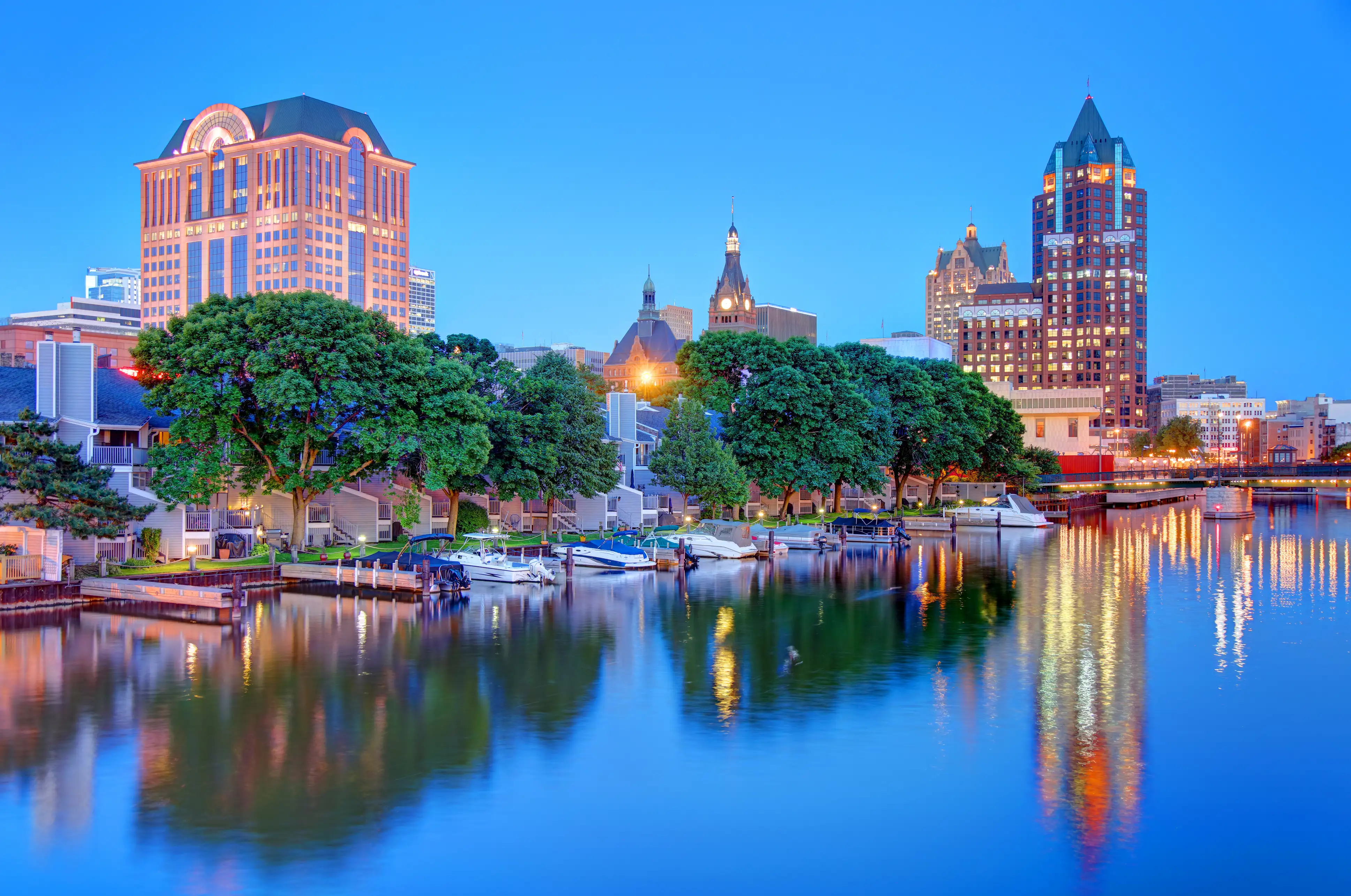
Commercial Roofing in Bayside, WI
Roofing for Bayside's offices and retail sits close enough to Lake Michigan that wind uplift and winter ice loading drive the inspection more than anything else.
Multi-Family and Apartment Complex Roofing
Apartment complex roofs in Milwaukee shelter occupied units below and carry the ice-dam risk that low-slope multifamily invites, so work is staged to keep residents dry throughout.

Auto Dealership Roofing
Dealership roofs cover showrooms, service bays, and parts storage; the priority is keeping a busy Milwaukee dealership open while leaks over inventory and customers get resolved.
Automotive Manufacturing Roofing in Milwaukee, WI
Auto-manufacturing roofs carry heavy process exhaust and constant rooftop traffic, so on these Milwaukee plants penetration flashings and membrane fatigue lead the assessment.